https://techspirehub.com/wp-admin/post.php?post=25&action=edit
Sometimes We Break Necks, Sometimes It’s Fine
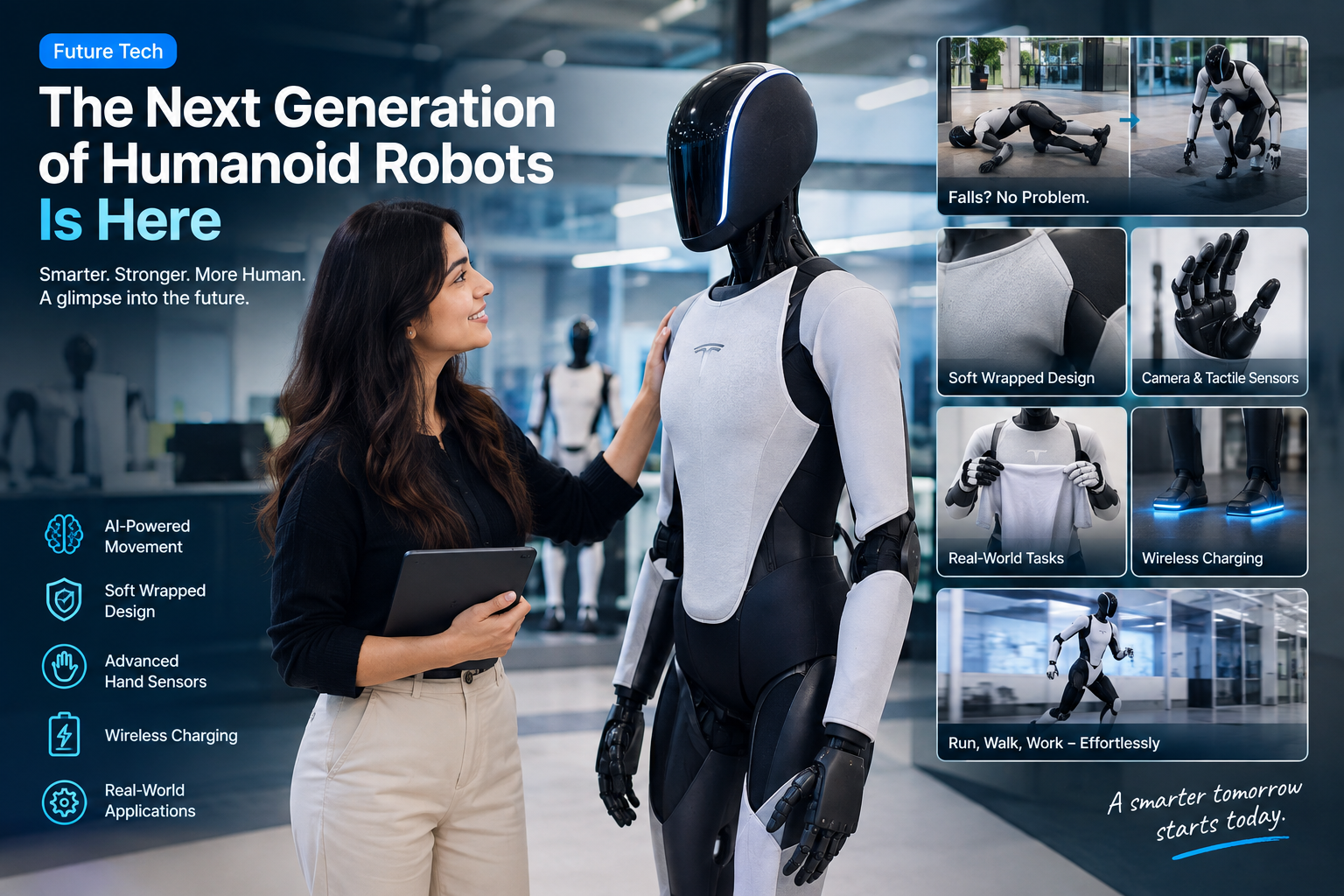
It depends on how hard you push the robot. For the most part, the robot can get back up after a fall and continue working. The way the robot falls determines what happens next. Sometimes a fall can damage the robot, while other times the robot gets back up without a problem.
The Robot’s Almost All Fully Soft Wrapped
The company covers almost the entire robot with a soft outer layer. The team can make clothes for the robot for customers and internal use.
People can put the clothes on the robot themselves. They can unzip the clothing, remove it, and put it back on without using any tools.
We Don’t Need Any Tools To Do So
People can remove and install the robot’s outer clothing manually. They do not need special equipment or tools to complete the process.
Can We See What’s In There?
The robot’s torso houses its main internal components. The outer covering protects the internal hardware inside the structure.
The Brains And All The Energy Are In The Torso
The torso contains the battery, GPUs, computer systems, and power distribution components. The robot stores its energy and runs its main computing systems from inside the torso.
Basically Left With 40 Joints
The robot uses around 40 joints. Electric motors power the joints, while numerous sensors help the robot maintain balance and perform different tasks.
There’s No Code Helping Us Do This
A neural network controls the robot’s walking and movements. Engineers do not use traditional hand-written code to control every individual movement.
The robot uses its learned neural-network system to walk, turn around, and perform different movements.
Can It Run? Let’s See How Fast It Can Go
The robot has a running mode that allows it to move at higher speeds. The team has tested the robot while jogging outside at the company’s campus.
The robot also wears high-top style footwear that gives it a distinctive appearance.
Cameras In The Palms
The robot uses cameras inside its palms to see its fingertips while grabbing objects.
Each fingertip contains a tactile sensor. These sensors detect touch and measure the forces the robot applies while handling objects.
Will It Crush My Hand?
The robot can grip a person’s hand with significant force. Its sensors help the robot detect physical interaction while it uses its hands.
During the demonstration, the robot holds a person’s hand firmly enough that the person cannot easily move it.
We Can Also Fold A T-Shirt
The robot can pick up boxes weighing around 40 pounds from the floor. It can also perform smaller tasks such as folding a T-shirt.
These capabilities allow the robot to handle physical objects and perform everyday tasks.
It’s Literally Going To Turn Off If You Push The Button
The robot has a power button that turns the machine off when someone presses it.
The team does not intend people to press the button during operation. People in the office have even felt tempted to push it without realizing that the button would immediately shut the robot down.
Anywhere From Four And Five Hours
The robot can operate for around four to five hours, depending on its workload.
The robot takes about one hour to charge. Teams can use another robot while the first robot charges, allowing them to continue their work.
We Charge Wirelessly Through The Feet
The robot charges wirelessly through its feet.
Charging pads inside the feet connect with a charging surface when the robot stands on it. The system uses inductive charging to transfer power to the robot.
The robot can complete the charging process in about one hour.
Like An iPhone Charger
The robot can charge simply by standing on a charging mat.
The team designed the system in-house. The charging method works similarly to a wireless phone charger.
The system can deliver around one kilowatt through each foot, giving the robot approximately two kilowatts of charging power.
As Soon As We Make It Work Really Well
The company develops the robot for commercial applications. The team plans to bring the robot to consumers after making the technology reliable enough for everyday use.
The team has tested the robot in a home environment. The company also plans to send robots to commercial customers as production expands.
We Work With BMW
The company says it works with BMW, one of the world’s largest logistics companies, and Brookfield.
Brookfield manages a large portfolio of companies and properties. The company also mentioned additional customers that it plans to announce later.
The team plans to ship as many robots as possible during the year.
We Make About One Every 90 Minutes
The company manufactures the robots at an on-site production facility.
When the production line runs, the company can produce approximately one robot every 90 minutes.
The company plans to increase its production rate as the manufacturing operation expands.
A Million Units A Year
The current facility can potentially produce around 40,000 to 50,000 robots per year at full capacity.
The company plans to design larger manufacturing systems and has discussed a long-term goal of producing around one million units per year within the decade.
Producing robots at that scale would require manufacturing systems similar to those used to produce high volumes of consumer electronics.
It Has Push Recovery
The robot uses push-recovery technology to maintain its balance.
When someone pushes the robot, it adjusts its position and responds to the force. During the demonstration, the robot remains standing even when the person increases the force of the push.
This Is Three And A Half Years
The robot represents about three and a half years of development.
The company got the robot walking around its office approximately three years after development began.
The team plans to improve the technology through successive generations. Each new version can improve walking, balance, movement, sensing, manufacturing, and overall capabilities.
The team compares this development process to the progression of consumer electronics, where each generation introduces new improvements over the previous one.
The company plans to develop new robot generations regularly and make future versions more capable than the current design.