https://www.scientificamerican.com/article/data-centers-in-space
How AI Could Move Data Centers Into Space
When you ask AI to answer a question, generate an image, or write a line of code, a machine kicks into gear somewhere. A neural network of high-performance computers processes your request inside data centers that consume huge areas of land. Thousands of these facilities now operate around the world, and their growing energy demands are making them increasingly difficult to sustain.
AI Data Centers Are Hitting an Energy Wall
AI data centers require enormous amounts of electricity to run their computers and cool their equipment. As a result, they have reached what experts call an energy wall. However, demand continues to accelerate. Global electricity consumption by data centers is expected to double by 2030. By 2050, these facilities could account for a tenth of all electricity consumed on Earth.
North America May Need 50 to 100 New Nuclear Power Projects
Some forecasts suggest that North America will need an additional 50 to 100 gigawatts of energy capacity over the next three years to support new data centers. For context, one nuclear power station generates approximately one gigawatt of electricity. Meeting this demand could require the equivalent of 50 to 100 new nuclear power stations in the United States alone.
Starcloud Plans to Move Data Centers Into Space
The answer may lie above Earth. In late 2025, space startup Starcloud sent a satellite into orbit carrying an NVIDIA H100 chip, one of the most powerful processors ever deployed in space. The small machine, roughly the size of a mini-fridge, represents the company’s ambitious plan to move data centers off Earth.
Starcloud-1 Proves AI Chips Can Work in Space
Before Starcloud launched Starcloud-1, many people believed that engineers could not operate advanced terrestrial GPUs and AI chips in space. The company carried out extensive engineering work to develop thermal management systems and radiation shielding that could protect the chips and keep them operating.
Starcloud is a prototype satellite that orbits Earth in approximately 90 minutes.
Starcloud-1 Is Only the Beginning
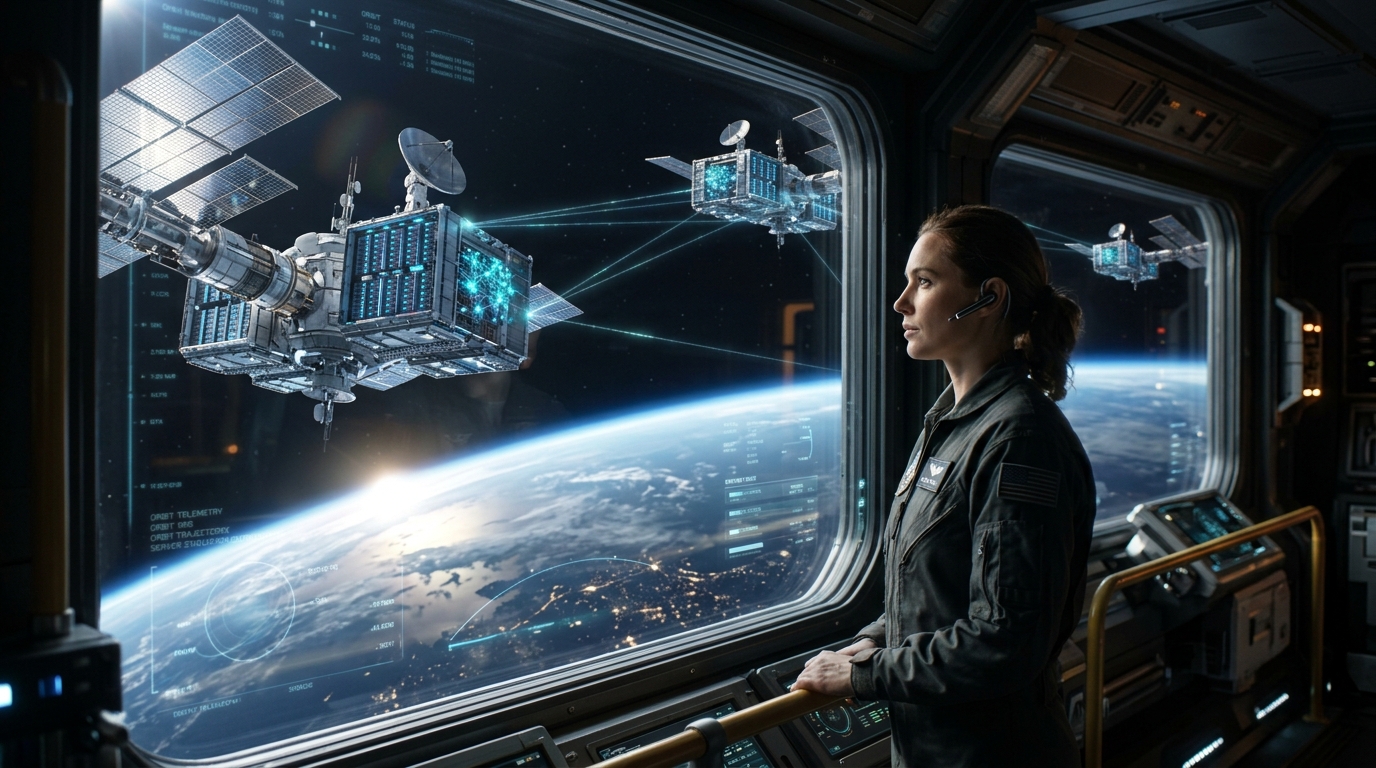
Starcloud-1 is not a data center yet. It is a single prototype in orbit. The company envisions deploying tens of thousands of satellites, each carrying chips like the H100, and connecting them to perform complex, large-scale computing tasks in space. Engineers call this concept orbital computing.
How Satellites Could Process AI Requests in Space
In this proposed system, a user on Earth would send a prompt into space through laser communication links. AI chips inside satellites would process the request, powered by enormous solar arrays that could stretch up to four kilometers by four kilometers.
Together, these satellites would form a connected computing network that could send processed results back to Earth in milliseconds.
Why Data Centers in Space Could Make Sense
When Starcloud first discussed building data centers in space two years ago, many people considered the idea unrealistic or science fiction. However, the concept addresses a genuine problem on Earth.
Traditional data centers require vast amounts of land, water, and electricity. As AI systems become more powerful, they generate more heat, making cooling increasingly difficult and expensive.
Space offers a different environment. Operators would face fewer land constraints and terrestrial permitting challenges, while satellites could access abundant solar energy. However, engineers must overcome several significant technical challenges before this vision becomes practical.
Researchers Are Developing Solutions for Space-Based Solar Power
Solar panels for orbital data centers would need to cover enormous areas, but engineers have limited experience operating solar arrays of that size in space.
At Nanyang Technological University (NTU) in Singapore, researchers are testing technologies that could help make large-scale solar power systems suitable for space applications.