AI Needs Power: Who Pays for It?
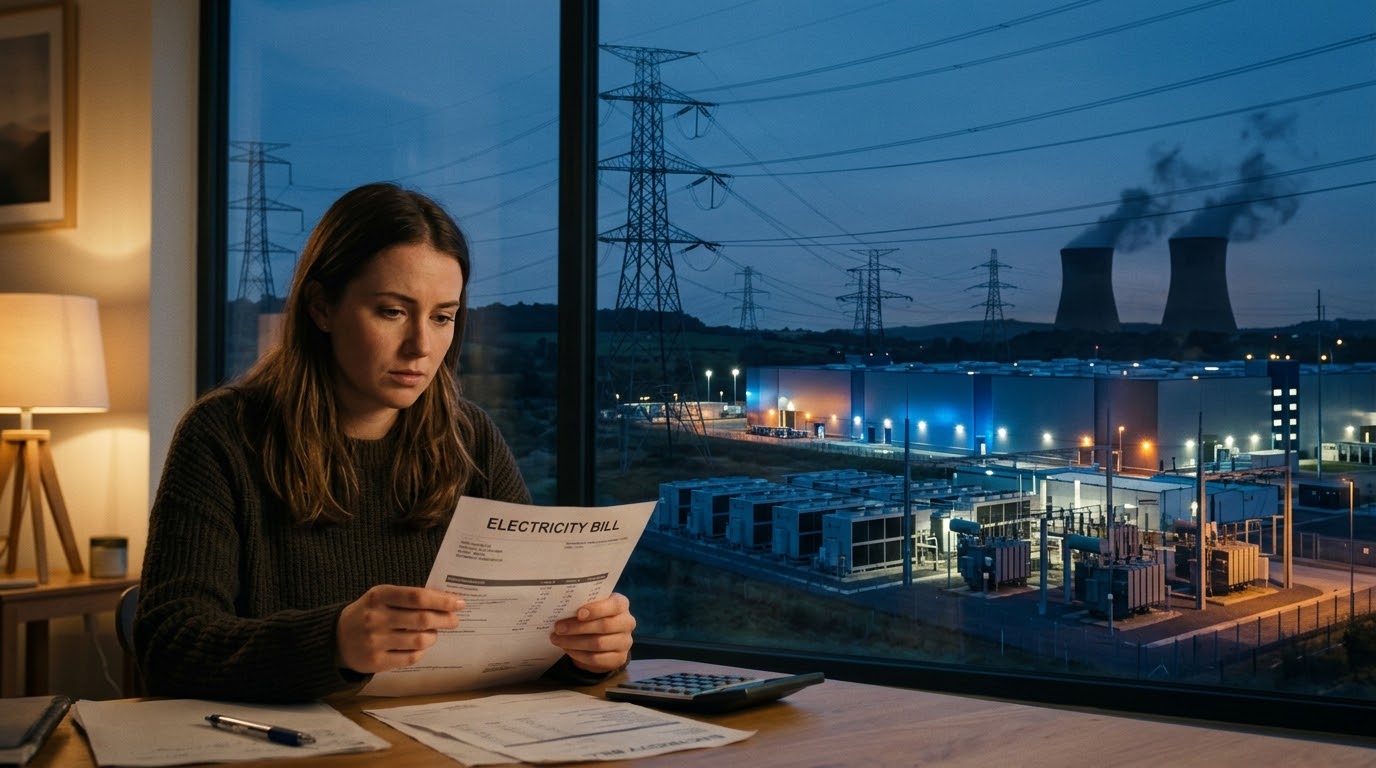
Artificial intelligence needs electricity to support scientific research, write code, and turn a simple “no” into six paragraphs. Microsoft has signed a power agreement to help restart a nuclear power plant in Pennsylvania. Depending on where you live, expanding the electricity system to support data centers could also affect your electricity bill.
If companies ever build a machine that takes my job, I would appreciate it if they at least covered the electricity costs.
AI Has Automated Both Sides of the Conversation
The AI industry uses electricity to conduct research, write code, and perform countless other tasks. Your coworker might ask an AI tool to draft a response, then ask another AI tool to summarize it. The summary simply says “no.”
We have automated both sides of the conversation and somehow managed to keep the meeting.
AI companies pay for the electricity they use. The real debate concerns what happens when they need additional power plants and transmission lines, whether electricity prices rise while everyone waits, and who pays if a promised project never materializes.
These costs can affect you even if you never subscribe to an AI tool.
What Do Data Centers Actually Use?
A data center is a building full of computers. Some facilities run websites, store files, and stream videos. Others train AI models or run them whenever users submit prompts.
These computers consume electricity and generate heat. Even when an AI response appears as just a few words on your screen, powerful machinery must process your request and keep the equipment cool.
AI Prompts Do Not All Consume the Same Amount of Electricity
The amount of computing power an AI task requires depends on the task and the system. Generating a video can require much more computing than answering a short question.
Therefore, no single electricity cost applies to every AI prompt.
AI Data Centers Are Increasing Electricity Demand
The International Energy Agency estimates that electricity consumption at AI-focused data centers increased by 50 percent worldwide in 2025. Electricity consumption across all data centers increased by 17 percent during the same period.
AI-focused data centers form part of the broader data center industry, so these figures describe global computing demand rather than the percentage increase in any household’s electricity bill.
The local challenge comes when a particular area must accommodate a large amount of new electricity demand. A developer might finish constructing a data center before the utility completes the power lines and substations needed to supply it.
Buying the computers does not guarantee that the facility can connect to the electricity grid.
How Data Centers Connect to the Electricity Grid
Electricity reaches your home through a physical network of power plants, transmission lines, substations, and distribution equipment. A data center needs access to that same network.
If the existing system has enough capacity, a large new customer can help pay for infrastructure that already serves the area.
However, the situation changes when the utility must install expensive new equipment to accommodate the additional demand.
A larger customer can generate more revenue, but it can also create additional costs. The connection agreement determines how the utility allocates those costs and whether other customers benefit.
Why Electricity Bills Can Increase
Your electricity bill helps pay for the power you consume, the network that delivers it, and the equipment utilities maintain to meet demand.
Consider a hot afternoon when millions of people switch on their air conditioners. Utilities must have enough generating capacity available to meet that demand, even when electricity consumption falls during cooler periods.
How Capacity Payments Affect Electricity Prices
PJM coordinates a major regional electricity system across parts of the eastern United States. Its capacity market arranges payments to ensure that sufficient electricity resources will be available in future periods.
Power plants and other resources must remain ready to supply electricity when customers need it, even when they are not generating power continuously. Maintaining that readiness costs money.
When the cost of securing enough capacity increases, electricity expenses can rise for customers in the affected markets.
A Real Household Example: Pepco’s Electricity Rate Increase
In July, Pepco, an electric utility serving customers in Washington, D.C., increased its default electricity supply rates. According to the relevant regulatory estimate, a household using an average amount of electricity faced an additional $9.56 per month on its total bill.
The regulator identified data center demand as one contributing factor, alongside power plant retirements, reliability requirements, and renewable energy requirements.
The estimate did not isolate the portion caused exclusively by AI. Therefore, the increase does not represent a specific tax on chatbot usage. Instead, it illustrates how several pressures can combine to affect household electricity bills.
How Much Can We Blame on AI?
A Pacific Northwest National Laboratory report published in September found that data centers had increased wholesale energy and capacity prices in several electricity markets. However, the report said data centers had not been the primary driver of residential electricity price increases to date.
If your electricity bill increases, you need to examine the factors affecting your local market. Higher electricity consumption and higher electricity rates can both increase your bill, but they represent different causes.
A single AI prompt does not automatically add a guaranteed dollar amount to your neighbor’s electricity bill.
The bigger question is how utilities prepare for large new customers and whether those customers pay the full costs of the infrastructure they require.
Will the Proposed Data Center Actually Open?
Developers often request electricity connections before their data centers begin operating. They may also explore several possible locations before deciding where to build.
Utilities must estimate whether each project will proceed, when it will open, and how much electricity it will require.
If utilities treat every proposed facility as a guaranteed project, they could prepare for several data centers when developers eventually build only one.
Exploring different locations is normal, but treating every expression of interest as a completed project can create expensive planning mistakes.
Predicting completed data center projects from every expression of interest is a bit like predicting birth rates from Tinder matches. You are being very generous about how those evenings will end.
Why Unrealized Data Center Projects Can Cost Customers Money
Electric utilities must plan infrastructure years before some projects begin operating. If a developer cancels a data center after the utility has already built new equipment, the utility may still need to recover those costs.
Some infrastructure might benefit other customers, but the utility could also face expenses that it cannot easily eliminate.
The developer can change its plans, but the people living in the area cannot simply stop needing electricity.
Contracts Can Protect Electricity Customers
Companies can discontinue a product with a blog post, but the power lines and equipment built to serve their data centers remain in place. Canceling a project does not automatically eliminate the financial obligations associated with its construction.
Utilities and regulators can use contracts to protect existing customers against some of these risks.
Special Rules for Large Data Center Projects in Ohio
Ohio has introduced special requirements for certain new or expanding data center customers requesting more than 25 megawatts of electricity demand.
Megawatts measure the rate at which a facility consumes power at a particular moment, rather than the total amount of electricity it uses over an entire month.
Under such arrangements, a facility may increase its electricity demand gradually as operations expand. New customers can also face minimum contractual commitments, including commitments lasting at least eight years under certain rules.
However, regulators and customers must still examine whether those payments cover the necessary infrastructure costs and whether the company can meet its contractual obligations.
Microsoft’s Nuclear Power Agreement Could Add Electricity Supply
Another way companies can support growing electricity demand is by helping bring additional power generation online.
Microsoft has signed an agreement with Constellation Energy to support the restart of the former Three Mile Island Unit 1 nuclear reactor in Pennsylvania. The company plans to operate the facility under the name Crane Clean Energy Center.
The reactor shut down for economic reasons in 2019. It is separate from the neighboring Unit 2 reactor, which suffered severe damage during the 1979 accident.
The agreement supports electricity generation, but it does not mean that a particular chatbot response receives electricity directly from a dedicated reactor.
Nuclear Regulators Must Still Inspect the Plant
Restarting a nuclear reactor requires regulatory oversight, inspections, and safety checks. Companies cannot bypass these requirements simply because they want to bring AI services to market faster.
If a company wants to launch a better chatbot sooner, it can shorten its product presentation. Nuclear safety inspections must still follow the required process.
Can AI Computing Wait Until Electricity Demand Falls?
Electricity demand changes throughout the day. A data center might consume large amounts of electricity over a year while also placing particularly heavy demands on the grid during peak hours.
If operators can move suitable computing tasks to periods when electricity demand is lower, utilities may find it easier to supply the facility.
Moving Non-Urgent AI Tasks to Off-Peak Hours
Some computing tasks can wait or move to another time, while other services need to operate continuously.
For example, delaying a non-urgent image-generation request until overnight might reduce demand during a busy afternoon. The image will still be waiting when the system has more available capacity.
We do not need to treat every delayed image as if it were a medical emergency.
Shifting flexible computing workloads can reduce demand during peak periods, but this strategy works only when operators can actually move those tasks and the arrangement matches the electricity grid’s needs.
When Can a Data Center Help Lower Electricity Bills?
A large investment announcement does not automatically mean that a project will benefit households.
To understand the potential impact, consumers and regulators should examine what the company plans to build, who will pay for the required infrastructure, and what financial obligations the customer must meet if its plans change.
The goal is to ensure that new data centers contribute fairly to the electricity system rather than leaving existing customers to absorb avoidable costs.
What Should You Check on Your Electricity Bill?
Start by checking how much electricity you consumed and the rate your supplier charged you.
Then examine whether your consumption increased, your electricity rate changed, or your supplier introduced other charges. Your utility or regulator may also publish information explaining the reasons for recent rate changes.
Data centers pay their electricity bills, but whether they cover the full cost of expanding the electricity system to accommodate them remains the more important question.
AI Voiceovers Also Consume Computing Resources
And yes, this video uses an AI-generated voice. Apparently, the computing power I use is absolutely essential, while everyone else’s prompts deserve a thorough public investigation.
I wanted to know who would pay for the machine that might take my job, and I have already given it the narration.
Subscribe to Snag Theory for more explanations of the systems we all depend on.